





DIY 12V to 230V Car Inverter Circuit: Step-by-Step Guide with Diagrams [2026 Edition]
- What is a 12V to 230V Car Inverter Circuit?
- Key Takeaways: Quick Summary of Your DIY Inverter Project
- Core Components Needed for a 2026 DIY Inverter Build
- Step-by-Step DIY Car Inverter Circuit Diagram & Assembly
- Expert Tips & Common Mistakes in MOSFET Inverter Design
- DIY vs. Professional Manufacturing: The Congsin Advantage
- Upgrading Your Setup: Industry Leading Solutions for 2026
- Conclusion
- FAQs About car inverter circuit
- How does a 12V to 230V car inverter work?
- Can I build a pure sine wave inverter at home?
- What is the best MOSFET for a DIY 12V inverter?
- Why does my DIY inverter overheat?
- How many watts can a 12V car cigarette lighter socket handle?
- What is the difference between a pure sine wave and a modified sine wave?
- Is it cheaper to build or buy a car inverter?
- What safety features should a car inverter circuit have?
What is a 12V to 230V Car Inverter Circuit?

A car inverter circuit is an electronic system that converts 12V direct current (DC) from a vehicle's battery into 230V alternating current (AC) to power standard household appliances. It utilizes an oscillator, MOSFETs, and a step-up transformer to function.
The core process of this conversion involves using an oscillator circuit to generate rapid electrical pulses. These pulses control high-power transistors that switch the DC power at incredibly high frequencies. Once the low-voltage DC is actively switched, it passes through a step-up transformer, which amplifies the voltage from 12V up to the standard 230V required by most appliances.
As reported by Wikipedia, a power inverter is a power electronic device that changes direct current (DC) to alternating current (AC), where the resulting AC frequency depends heavily on the specific circuitry employed. Modern 2026 inverter circuits achieve optimal results by utilizing Pulse Width Modulation (PWM) to create either a modified sine wave or a clean pure sine wave inverter circuit that is safe for sensitive electronics.
Key Takeaways: Quick Summary of Your DIY Inverter Project
The essential takeaways for building a 12V to 230V power inverter DIY project include understanding distinct waveform differences, selecting high-capacity components, and adhering to strict safety protocols. Mastering these elements ensures a successful and safe DC to AC converter schematic build.
Before diving into the complex assembly of your inverter, it is crucial to fully understand the foundational principles that dictate both performance and electrical safety:
- Waveform Variations: Understand the vital difference between a pure sine wave (best for sensitive electronics like laptops and medical equipment) and a modified sine wave (easier to build and sufficient for simple power tools).
- Component Selection: Selecting the right high-power MOSFETs (such as the reliable IRF3205) and a properly rated ferrite core transformer is critical for maximizing power efficiency and minimizing heat loss.
- Electrical Safety: Safety is always paramount. DIY 230V circuits carry lethal voltages, requiring strict adherence to high-voltage insulation and grounding protocols to prevent bodily injury or vehicle fires.
Core Components Needed for a 2026 DIY Inverter Build
The required components for a 2026 DIY inverter build feature an SPWM driver module, high-side and low-side MOSFETs, a step-up transformer, high-voltage filtering capacitors, and heavy-duty aluminum heatsinks to provide robust and reliable thermal management during heavy loads.
Sourcing high-quality components is the foundation of a reliable car inverter circuit. As detailed by Wikipedia, the Metal-Oxide-Semiconductor Field-Effect Transistor (MOSFET) is universally utilized in switching circuits due to its ability to handle significant power with very low consumption, making it indispensable for modern inverters.
- EGS002 SPWM Driver Module: The modern 2026 standard for generating precise pure sine waves effortlessly, eliminating the need for complex custom microcontroller coding.
- High-Side and Low-Side MOSFETs: Essential components like the IRF3205 or modern GaN (Gallium Nitride) transistors ensure ultra-high-efficiency switching.
- Step-Up Transformer: A heavily wound ferrite core transformer specifically designed to handle either standard 50Hz operations or advanced high-frequency switching.
- Filtering Components: High-voltage capacitors and AC filter inductors are strictly necessary to smooth the raw, blocky output wave into a usable format.
- Thermal Management Solutions: Heavy-duty aluminum heatsinks, premium thermal paste, and active cooling fans are mandatory to prevent destructive thermal runaway.
Step-by-Step DIY Car Inverter Circuit Diagram & Assembly
To assemble your car inverter circuit diagram, you must systematically wire the oscillator module, configure the H-bridge transistor layout, connect the step-up transformer, and install the necessary output filtering components to ensure a safe, clean 230V AC waveform.
Building a functional inverter from a basic DC to AC converter schematic requires immense patience and precision. Following these structured steps will guide you through the process of converting 12V battery power into a stable 230V AC supply:
- Setting up the Oscillator Circuit: Begin by wiring the SPWM module to generate the necessary high-frequency gate driving signals. This module acts as the brain of your inverter, dictating the rhythm of the power flow.
- Wiring the H-Bridge Configuration: Carefully connect your MOSFETs in a standard H-bridge layout. This specific arrangement allows the circuit to seamlessly alternate the current flow back and forth across the transformer.
- Connecting the Step-Up Transformer: Safely and securely wire the output of the MOSFET H-bridge to the primary winding of your step-up transformer. Ensure all high-current connections are tightly soldered and insulated.
- Implementing Output Filtering: Install properly rated inductors and capacitors on the 230V secondary side. This final step cleans up high-frequency noise and outputs a beautifully smooth AC wave suitable for household devices.
Expert Tips & Common Mistakes in MOSFET Inverter Design

Critical tips for successful MOSFET inverter design include utilizing robust gate driver ICs and applying thermal paste correctly, while the most common mistake is drastically underestimating the massive 12V input current required for high-wattage inverter loads.
Transitioning from a theoretical schematic to a working physical model often reveals practical engineering challenges. Many hobbyists burn through expensive components because they overlook fundamental electrical rules.
- Common Mistake - Thin Wiring: Underestimating the 12V input current is dangerous. A 1000W inverter draws over 80 Amps at 12V; using thin wires will instantly cause melting or severe fire hazards.
- Expert Tip - Gate Drivers: Always use a robust Gate Driver IC (like the IR2110) instead of driving MOSFETs directly from a microcontroller. This prevents incomplete switching and severe component overheating.
- Common Mistake - Poor Cooling: Ignoring thermal paste and proper heatsink mounting will lead to rapid component failure under heavy loads. Heat dissipation is completely non-negotiable in power electronics.
- Expert Tip - Safe Testing: Always test the completed circuit using a low-voltage bench power supply equipped with current limiting before ever connecting it to a high-amperage car battery.
DIY vs. Professional Manufacturing: The Congsin Advantage
While a DIY build is a fantastic educational endeavor, achieving long-term reliability, intelligent protection, and maximum operational efficiency requires the advanced engineering, rigorous safety testing, and automated production capabilities of a professional power inverter manufacturer.
For electronics enthusiasts, creating a DIY project is deeply rewarding. However, when you need to power critical equipment in a vehicle, RV, or off-grid home, the stakes are much higher. Guangzhou Congsin Electronic Technology Co., Ltd., founded in early 1998, brings over 27 years of specialized, focused experience in the R&D and manufacturing of DC to AC power inverters.
Operating fully automated production lines, Congsin produces over 100+ precision-engineered models tailored for diverse energy needs. Unlike DIY builds, Congsin's pure sine wave inverters undergo rigorous testing with advanced instrumentation to ensure intelligent protection, such as over-voltage, short-circuit, and thermal shutdown protocols. Their quality system is ISO9001 certified, with international safety approvals including CE, EMC, LVD, ETL, FCC, RoHS, and E-MARK.
| Feature / Metric | DIY Car Inverter Circuit | Congsin Professional Inverter |
|---|---|---|
| Primary Purpose | Educational project, hobbyist learning | Reliable daily power, off-grid living, commercial use |
| Safety Certifications | None (Relies entirely on builder's skill) | ISO9001, CE, FCC, RoHS, ETL, E-MARK |
| Protection Systems | Basic (Usually just an external inline fuse) | Intelligent Over-voltage, Short-circuit, Thermal protection |
| Manufacturing Method | Hand-soldered on perfboard/custom PCB | Fully automated production lines with strict QA testing |
| Waveform Quality | Varies widely based on component quality | Precision-engineered Pure Sine Wave |
| Warranty & Support | None | Comprehensive OEM/ODM support and long-term warranty |
Upgrading Your Setup: Industry Leading Solutions for 2026
Upgrading to industry-leading solutions in 2026 involves exploring certified plug-and-play inverters, portable power stations, and solar charge controllers that guarantee absolute energy independence and uncompromising safety for modern vehicular and advanced off-grid setups.
If your power requirements exceed the capabilities of a hobbyist pure sine wave inverter circuit, it is time to look toward professional, certified hardware.
- Plug-and-Play Reliability: Exploring Congsin’s extensive catalog of 100+ models offers immediate, guaranteed power solutions for RVs, heavy-duty trucks, and complex solar systems without the inherent risks of DIY soldering.
- Global Customization: Congsin provides comprehensive OEM/ODM customization and private labeling for global distributors who require bespoke specifications and branded energy solutions.
- Complete Energy Ecosystems: Complement your high-quality power inverter setup with Congsin’s expertly engineered portable power stations and advanced solar charge controllers to achieve true, reliable energy independence anywhere in the world.
Conclusion

Building a car inverter circuit is a highly rewarding project that demystifies the complex principles of DC to AC conversion, MOSFET switching dynamics, and high-frequency transformer operation while testing your technical assembly skills.
Throughout this guide, we have explored the essential steps to construct a DIY inverter, from sourcing the right SPWM modules to safely wiring the high-voltage outputs. While building your own system is an excellent way to learn, you must always prioritize electrical safety, component quality, and thermal management to ensure your DIY project runs smoothly without endangering your vehicle or your personal safety. For those who require absolute reliability for off-grid living, commercial fleets, or sensitive electronics, transitioning to professionally manufactured, certified power solutions is the safest and most efficient path forward. As explained by Wikipedia, utilizing advanced Pulse Width Modulation techniques is vital for efficient power delivery—a standard flawlessly executed in modern commercial units.
Contact us today to optimize your car inverter circuit strategy with our professional OEM/ODM manufacturing services.
FAQs About car inverter circuit
How does a 12V to 230V car inverter work?
It uses an oscillator to rapidly switch the 12V DC current on and off. This switched current is pushed through a step-up transformer. The transformer increases the voltage to 230V, and filters smooth it into an AC waveform.
Can I build a pure sine wave inverter at home?
Yes, by using advanced microcontrollers or an SPWM driver board like the EGS002. You will also need an LC filter at the output to smooth the high-frequency square pulses into a clean sine wave. It is significantly more complex than building a modified sine wave inverter.
What is the best MOSFET for a DIY 12V inverter?
The IRF3205 is highly popular for DIY 12V inverters due to its low on-resistance and high current handling. IRFZ44N is another common, budget-friendly option for lower wattage projects. For 2026 designs, engineers are increasingly moving toward GaN (Gallium Nitride) transistors for higher efficiency.
Why does my DIY inverter overheat?
Overheating is usually caused by slow switching speeds in the MOSFETs (linear region losses). It can also result from inadequate heatsinks or overloading the transformer core. Ensuring strong gate drive signals and using thermal paste are critical fixes.
How many watts can a 12V car cigarette lighter socket handle?
Most standard 12V car sockets are fused at 10 to 15 amps. This limits the maximum safe continuous draw to about 120W to 150W. For higher wattage inverters, you must connect directly to the vehicle's battery terminals.
What is the difference between a pure sine wave and a modified sine wave?
A pure sine wave perfectly mimics the smooth, undulating power from a standard wall outlet, making it safe for sensitive electronics. A modified sine wave is a 'blocky' waveform that steps up and down abruptly. Modified sine waves can cause motors to run hot and certain electronics (like medical devices or laptops) to malfunction.
Is it cheaper to build or buy a car inverter?
For low-wattage, simple modified sine wave models, buying a manufactured unit is often cheaper due to mass production. Building is usually pursued for educational purposes or highly custom requirements. Professional units from manufacturers like Congsin offer safety guarantees and warranties that DIY cannot match.
What safety features should a car inverter circuit have?
Short-circuit protection to shut off power if outputs touch. Over-voltage and under-voltage protection to protect both the inverter and the car battery. Thermal shutdown sensors to prevent fires if the heatsink exceeds safe temperatures.
Remote Monitoring and IoT Features in MPPT Controllers
Comparing Pure Sine Wave vs Modified Sine Vehicle Inverters
Battery compatibility and charging modes for off-grid inverters
Improving Efficiency: Batteries and Pure Sine Wave Inverters
Modified Sine Wave Inverters
Can 4 USB ports fast charge at the same time?
Yes, 4 USB ports can fast charge mobile phones, tablets and other devices at the same time, meeting the needs of simultaneous charging of multiple devices.
Can this 2000W inverter power an air conditioner?
If the air conditioner power is within 2000W and the input is AC220V, it can supply power normally. It is recommended to ensure stable power when starting.
What is the working principle of the UPS function?
When the external power supply is normal, the inverter powers the device and charges the battery; when the external power supply is interrupted, it automatically switches to battery power to ensure uninterrupted operation of the device.
Which country’s voltage standards does it support?
It defaults to AC 220V output, suitable for regions with 220V voltage standards such as China and Europe; it can also be customized to output AC 110V, suitable for regions with 110V voltage standards such as the United States and Japan.
Pure Sine Wave Inverters
Does it have a charging (UPS) function?
No, this model is a pure inverter without UPS function.
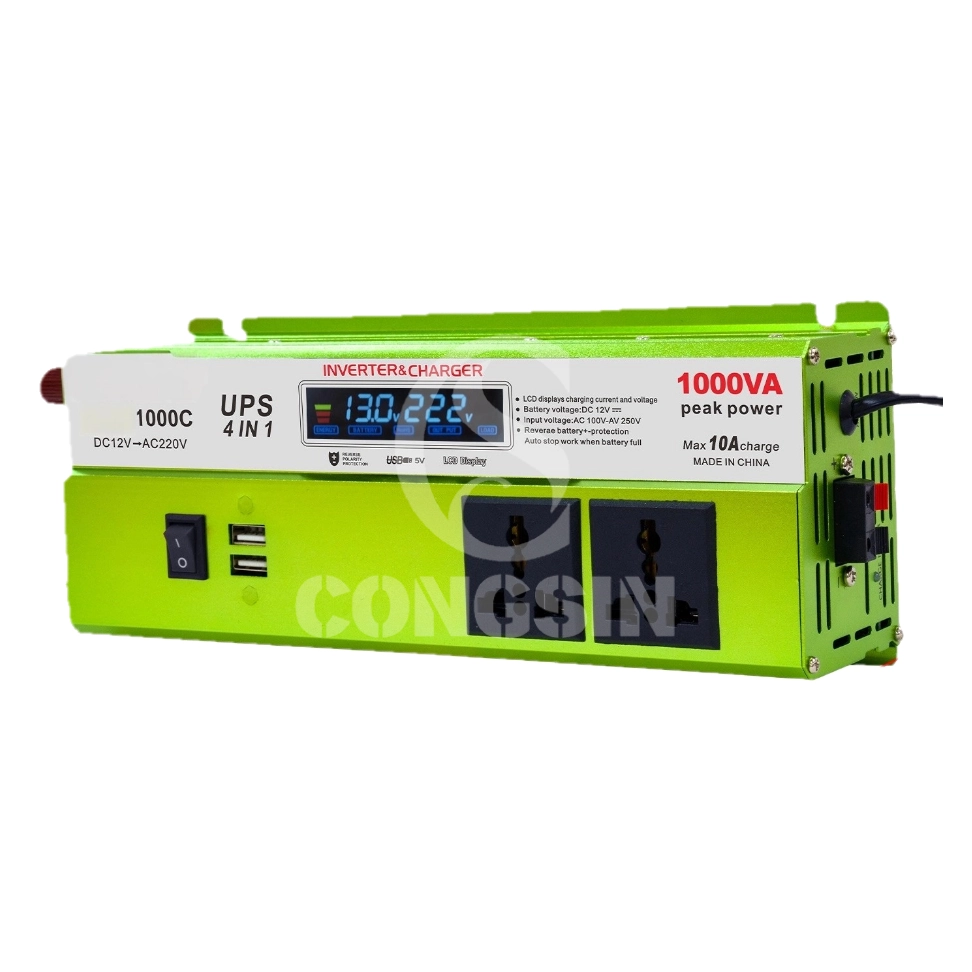
1000W 1500W 2000W UPS POWER INVERTER WITH CHARGER 10A 15A 20A DC TO AC 12v24v 110v 220V
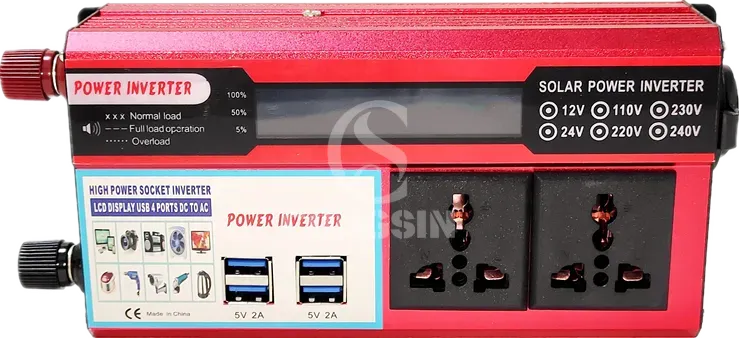
Congsin 500W Modified Sine Wave Inverter with LCD Display of Off Grid System Solar Power Inverter
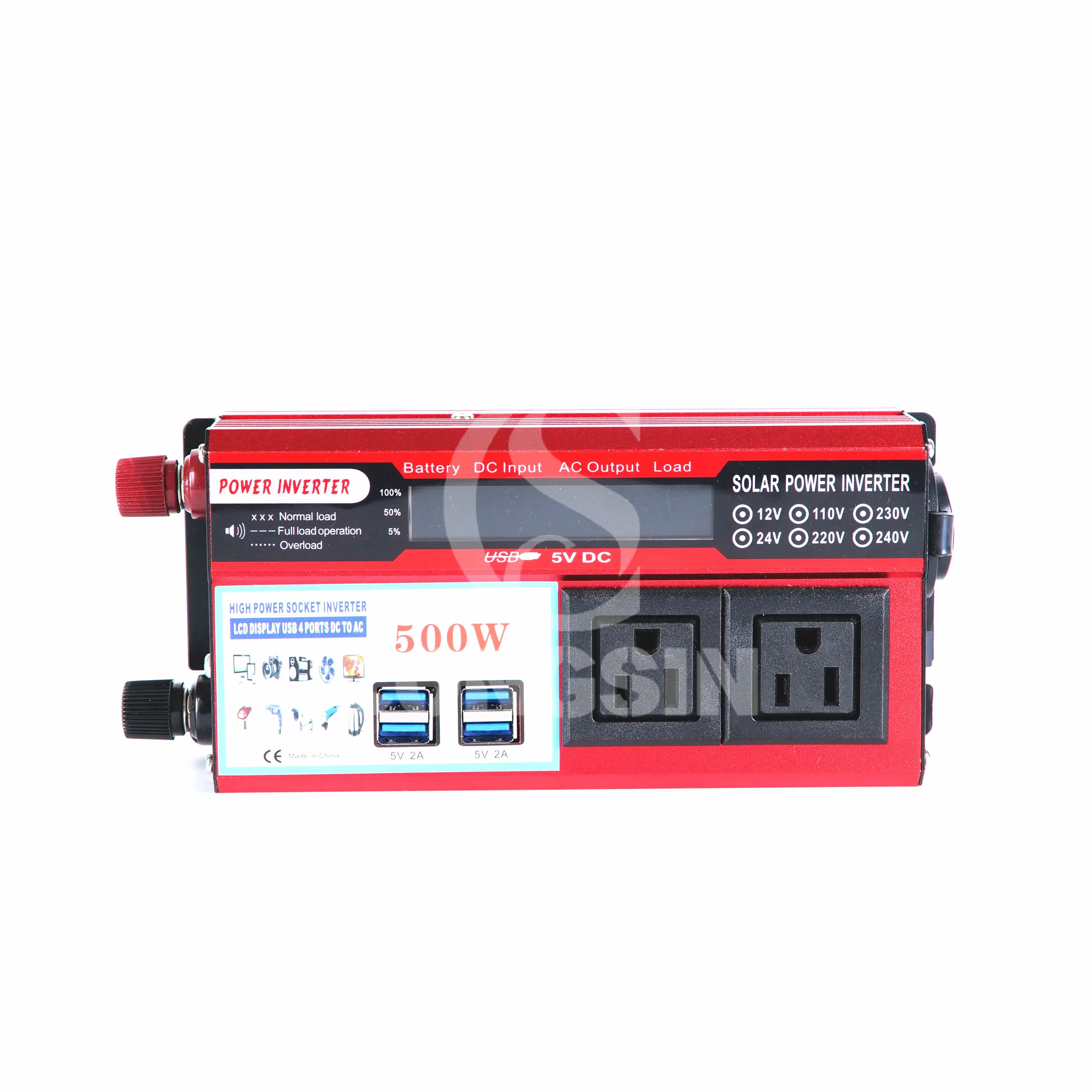
Congsin 500W modified sine wave power inverter US sockets 4 USB ports LCD display off grid
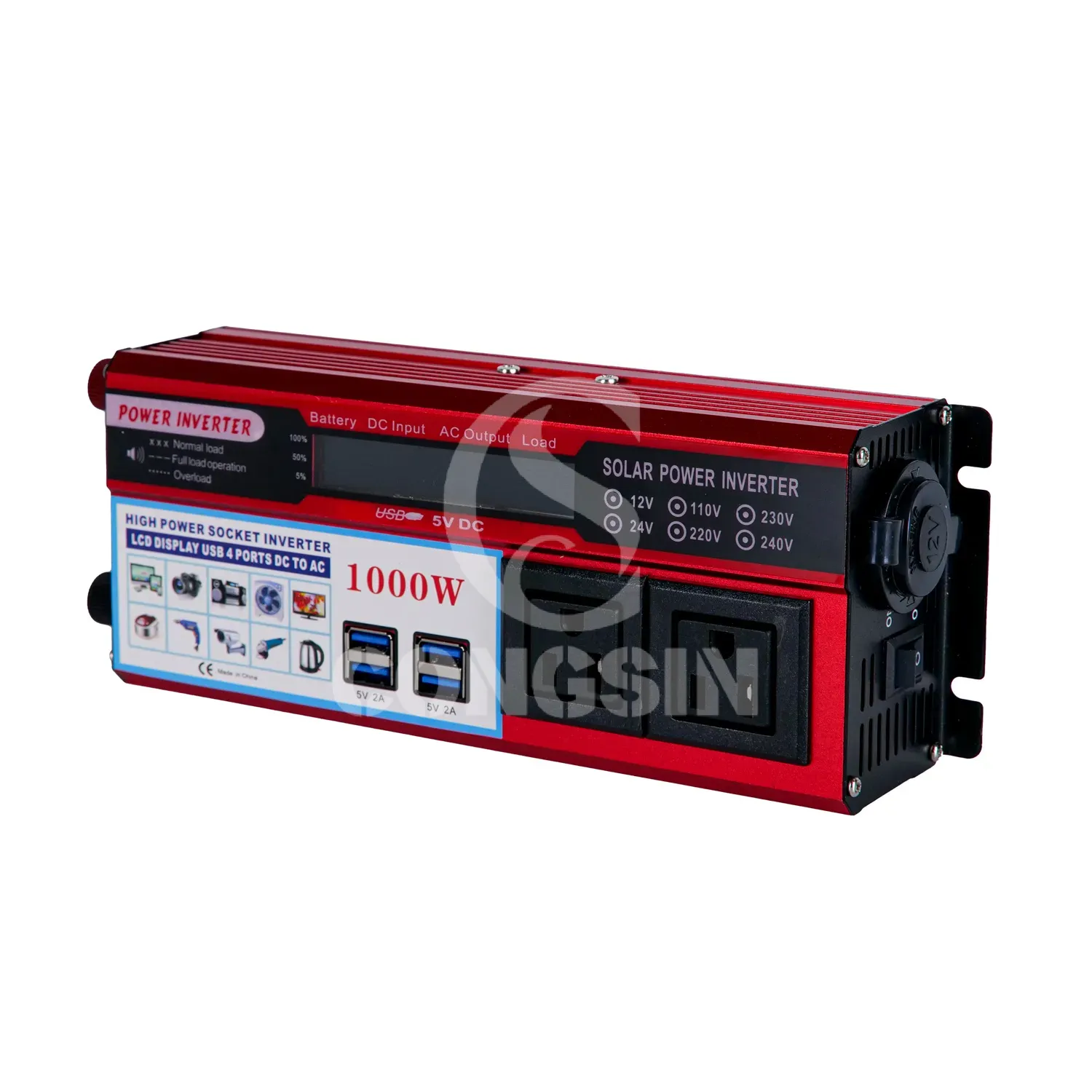
Congsin 1000W modified sine wave inverter with American Sockets and Lcd display portable 12V car RV

CONGSIN is a trusted OEM factory for power inverters, solar charge controllers, and DC converters. Reliable solutions for global B2B buyers.
 High Quality
 7/24 Service
 Guaranteed Warranty
© 2025 Congsin. All Rights Reserved.